
What Is Kimchi? Popular Types of Korean Kimchi and How to Enjoy Them

Updated: Jan 16
Kimchi: More Than Just a Side Dish 🇰🇷
popular type of kimchi Jang dok dae
\When people think of Korean food, kimchi is usually the first thing that comes to mind.But
kimchi is not just one dish.It’s a culture, a method of fermentation, and a daily food that Koreans eat in countless ways.
In this post, I’ll introduce the main types of kimchi and show you how Koreans actually enjoy them — not only as a side dish, but also cooked, fried, and transformed into completely new meals.
What Is Kimchi?
Kimchi is a traditional Korean fermented food made with vegetables, salt, garlic, ginger, chili pepper, and seafood-based seasonings.The fermentation process gives kimchi its unique sour, spicy, and umami-rich flavor.
There are over 200 varieties of kimchi, depending on region, season, and ingredients.
Popular Types of Kimchi You Should Know
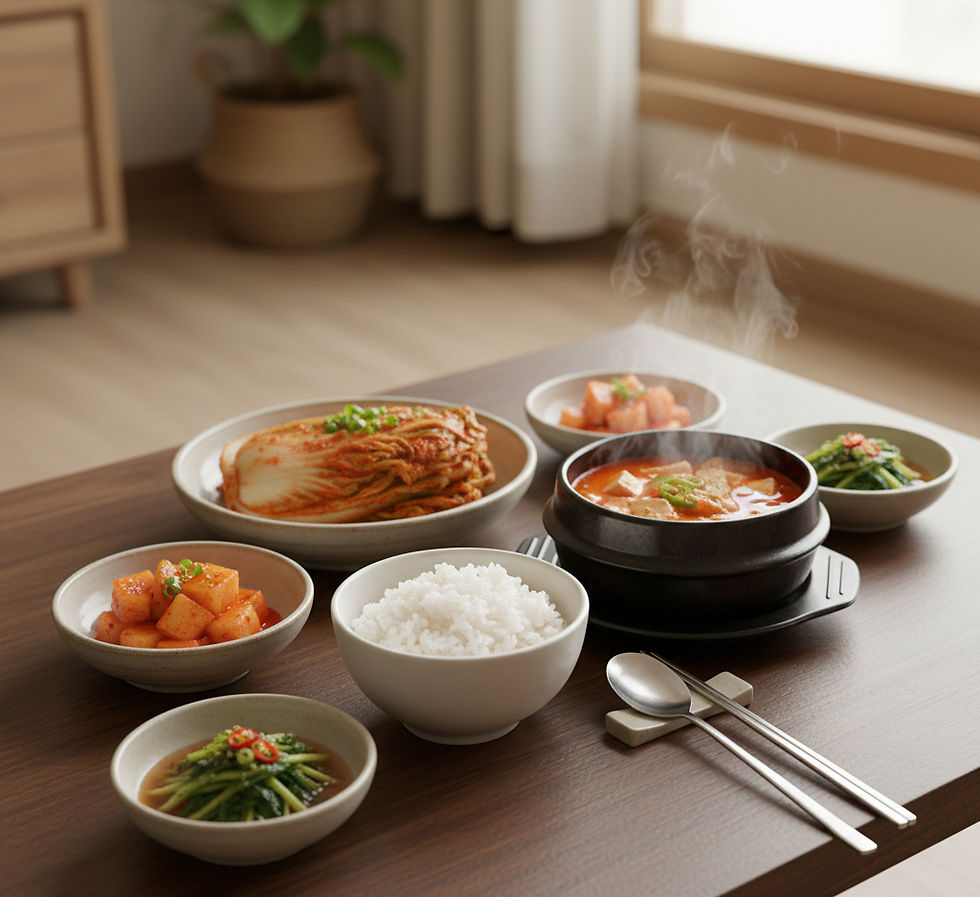
1. Baechu Kimchi (Napa Cabbage Kimchi)

This is the most famous and widely eaten kimchi.
Made from napa cabbage
Balanced spicy, salty, and fermented flavor
Usually what people mean when they say “kimchi”
How Koreans eat it:
As a side dish with rice
Stir-fried
Used in soups, stews, and pancakes
2. Kkakdugi (Radish Kimchi)

Cubed radish kimchi with a crunchy texture.
Fresh, juicy, and refreshing
Pairs perfectly with soups
Often eaten with:
Korean beef soup (Seolleongtang)
Pork bone soup (Gamjatang)
3. Chonggak Kimchi (Ponytail Radish Kimchi)

Small radishes with long green stems.
Crunchy and slightly spicy
Very popular with younger generations
4. Yeolmu Kimchi (Young Radish Kimchi)

A summer favorite.
Light, fresh, and less spicy
Often eaten cold
Best with:
Cold noodles (Bibim-guksu)
Mixed with rice and sesame oil
5. White Kimchi (Baek Kimchi)

Not all kimchi is spicy.
No chili pepper
Mild, clean, and slightly sweet
Perfect for people who can’t handle spicy food
Kimchi Is Not Just a Side Dish
One of the most interesting things about kimchi is how it changes over time — and how Koreans cook with it.
Fresh Kimchi (Geotjeori)
Crisp and lightly seasoned
Eaten immediately, not fermented
Fermented Kimchi
Sour, deep flavor
Best for cooking
How Koreans Use Kimchi in Cooking
Kimchi Fried Rice Kimchi Pancake Kimchi Stew
🥢 As a Side Dish
With rice and soup
Simple, everyday meal
🥞 Kimchi Pancake (Kimchi Jeon)
Chopped kimchi mixed into batter
Crispy outside, soft inside
Popular with makgeolli (rice wine)
🍚 Kimchi Fried Rice
Stir-fried with rice, oil, and sometimes pork or spam
Topped with a fried egg
One of Korea’s most loved comfort foods
🍲 Kimchi Stew (Kimchi Jjigae)
Made with well-fermented kimchi
Deep, rich, spicy broth
A classic Korean home-style dish
Why Koreans Never Throw Away Old Kimchi
When kimchi becomes too sour to eat raw, it becomes perfect for cooking.Older kimchi has stronger flavor and works better in stews and stir-fries.
In Korea, this is considered wisdom, not waste.
Kimchi as Korean Culture
Kimchi is more than food.
Families make it together (Kimjang)
Every home has its own taste
It represents patience, time, and care
For Koreans, kimchi is something you grow up with.For foreigners, it’s often the first step into Korean culture.
Final Thoughts
If you like Korean food, understanding kimchi helps you understand Korea itself.Whether you eat it fresh, fermented, fried, or boiled — kimchi always tells a story.
If you haven’t tried cooking with kimchi yet,don’t start with something complicated.
Start with kimchi fried rice.That’s how many Koreans fall in love with it too.

Comments